
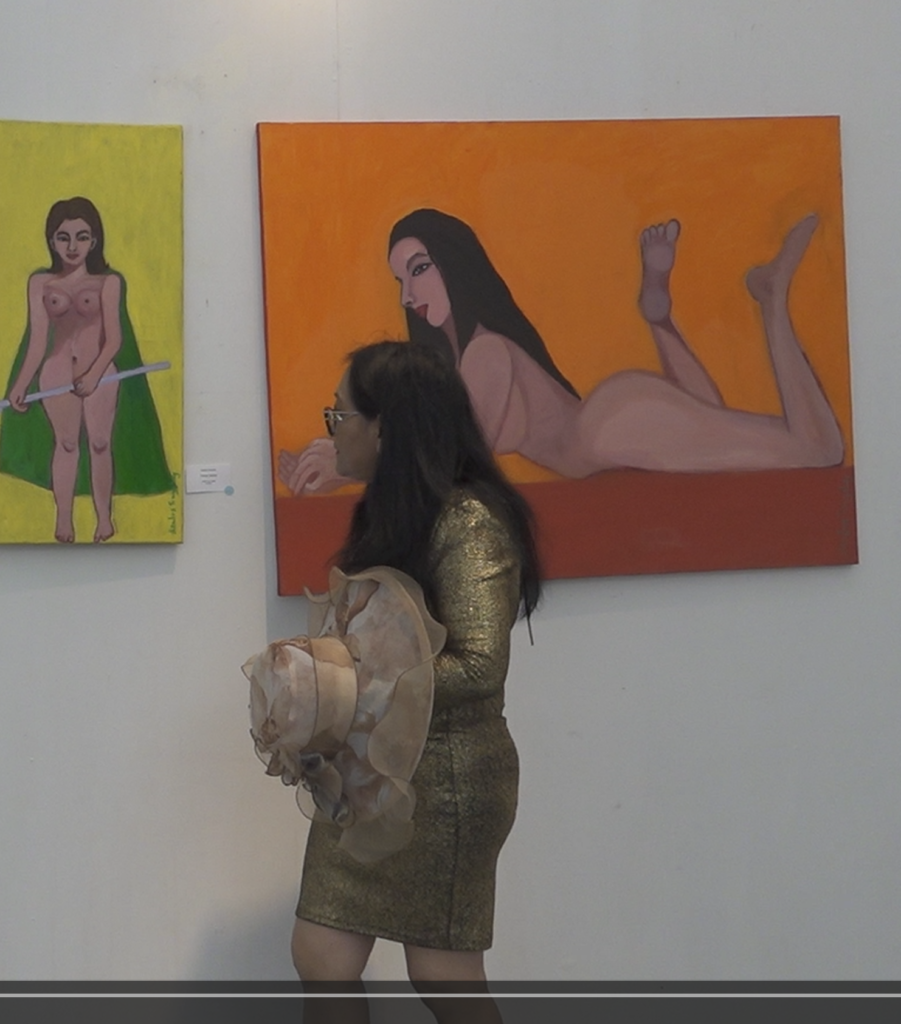
The Human Body as Abstract Art
When we look at the human body, we usually think in familiar terms—identity, age, gender, expression.
But as an artist, I often approach the body differently. I see it first as form.
Lines, curves, weight, balance, tension, and rhythm. Before it becomes a “person,” it is already a structure of shapes interacting with light and space.
In this way, the human body becomes abstract.
Not because it loses meaning, but because it expands beyond a single meaning.
A bent arm is not just an arm—it is a curve against negative space. A standing figure is not just posture—it is vertical tension interacting with gravity. A seated body becomes a composition of angles, shadows, and pauses.
This way of seeing changes everything.
It removes distraction and brings attention to structure.
In my work, I am less interested in perfection and more interested in truth. Perfection tends to flatten the human experience. It removes texture, hesitation, and individuality. But abstraction allows those qualities to remain visible in a different form.
The body, when observed closely, is never static. Even in stillness, it carries movement. Breath changes posture. Light changes perception. Time changes presence.
As a painter, I translate these subtle changes into visual language.
Color becomes emotion.
Shadow becomes depth.
Line becomes rhythm.
Photography also influences how I understand the body. A photograph captures a fraction of time, but within that fraction, there is already abstraction. Cropping, framing, and focus all transform the body into composition.
What is included becomes meaning.
What is excluded also becomes meaning.
In this sense, abstraction is not something added to the body—it is something revealed through attention.
There is also a quiet discipline in this way of seeing. It requires slowing down. It requires removing assumptions. It requires looking at something familiar until it becomes unfamiliar again.
Only then does the visual structure appear clearly.
The human body has been one of the most studied subjects in art history, from classical sculpture to modern expressionism. Yet it remains endlessly new because no two moments of the body are ever the same.
Light shifts.
Emotion shifts.
Time shifts.
Even a single pose carries infinite variations depending on how it is observed.
For me, painting the human body is not about representation in a literal sense. It is about interpretation—finding the balance between physical reality and visual expression.
Sometimes the result feels realistic. Sometimes it moves closer to abstraction. But in both cases, the intention remains the same: to understand form as experience, not just appearance.
In the end, the human body is not only something we see.
It is something we read.
A living composition that changes with every moment of observation.
And as an artist, I continue to return to it—not to define it, but to see it again, differently each time.