
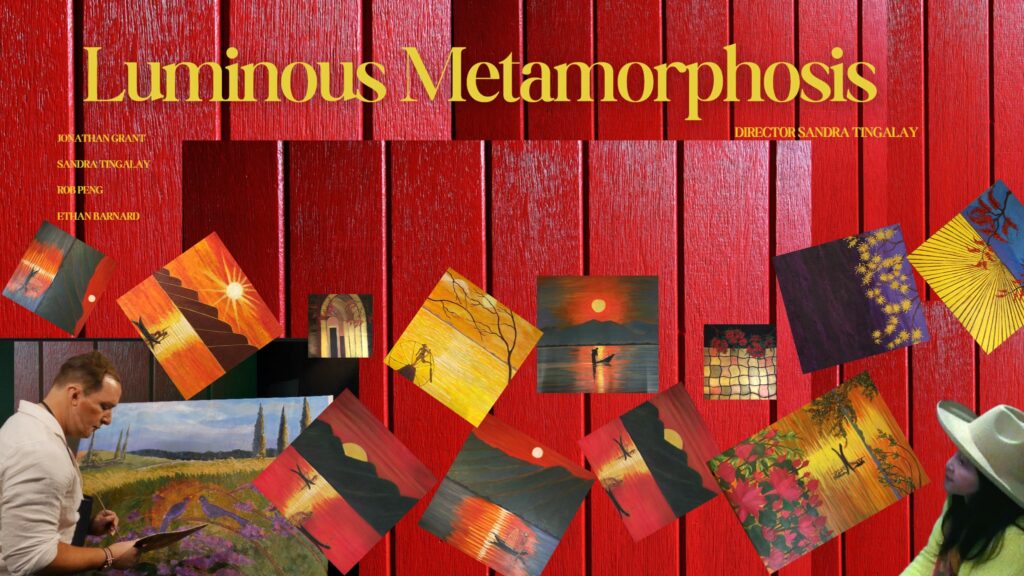
Behind the Canvas: My Painting Process
Every painting begins long before the brush touches the surface.
For me, the process starts with observation—sometimes from real life, sometimes from memory, sometimes from photographs or sketches gathered over time. I rarely begin with a fully fixed idea. Instead, I begin with a feeling, a question, or a visual fragment that stays in my mind.
I have learned that painting is not only about technique. It is about decision-making at every stage.
What to include.
What to leave out.
What to emphasize.
What to let quietly disappear into the background.
The first stage is often drawing. Sketches allow me to explore structure, proportion, and composition without pressure. They are not final statements—they are conversations with the image. In this stage, I am simply trying to understand the form.
Once I move to the canvas, the work changes.
Painting introduces a different kind of thinking. It is slower, more layered, and more physical. Each stroke carries weight. Each layer builds on the previous one, sometimes supporting it, sometimes correcting it, sometimes completely transforming it.
One of the most important elements in my process is light.
Light is not just an aesthetic tool—it is the emotional structure of the painting. It guides attention, creates depth, and defines atmosphere. Even when the subject is simple, light can turn it into something quiet, dramatic, or reflective.
I often work in layers, allowing the painting to evolve gradually. This means I may return to a piece multiple times, adjusting color, contrast, or composition as the image develops its own identity. Sometimes the painting leads the process more than I do.
There are moments when I step back and realize the work is no longer what I originally imagined. And that is not a failure—it is part of the dialogue between intention and discovery.
Another important part of my process is silence.
Painting requires stillness. Not only physical stillness, but mental focus. In that quiet space, I become more aware of subtle changes—the edge of a shadow, the balance of negative space, the emotional tone emerging from color relationships.
I do not rush this stage.
A painting reveals itself in its own time.
Sometimes quickly. Sometimes slowly. Sometimes unpredictably.
Finishing a painting is also a difficult decision. There is always a temptation to continue adjusting, refining, and perfecting. But at a certain point, the painting must be allowed to exist on its own.
A finished work is not a perfect work.
It is a resolved one.
When I complete a painting, I do not see it as an endpoint. I see it as a moment in an ongoing process of learning. Each piece teaches me something new about observation, emotion, and form.
Over time, I have come to understand that painting is not separate from life. It reflects how I see, how I think, and how I experience the world around me.
The canvas becomes a space where memory, perception, and imagination meet.
And every time I begin a new work, I am continuing a conversation that never truly ends.
I have been looking for a reliable sportsbook and this one really delivers. The odds are competitive and I actually received my bonus without any hassle. The mobile interface is clean and makes placing wagers really quick. Will be sticking around for sure. jeta7bet
Thank you.