
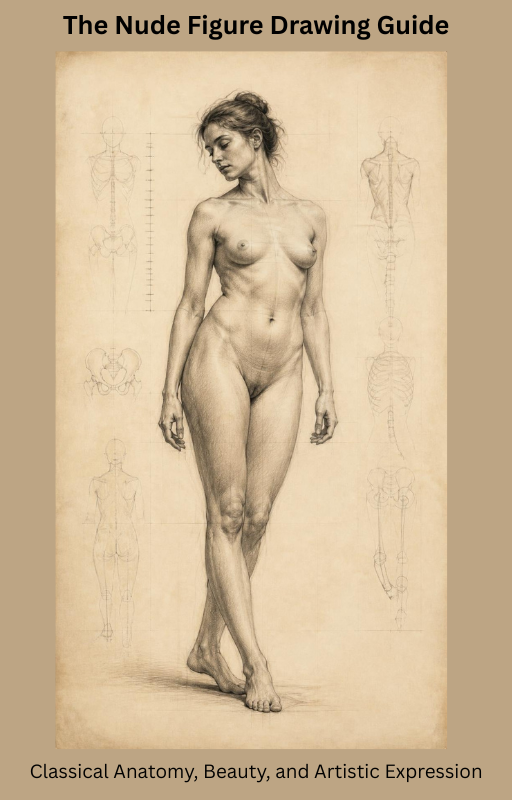
Why the Human Figure Has Inspired Artists for Thousands of Years
Throughout the history of art, one subject has appeared again and again across cultures, civilizations, and generations: the human figure.
From ancient sculptures carved in marble to Renaissance paintings, from classical drawings to contemporary digital artwork, artists have continuously returned to the human form as a source of inspiration. The reason is simple — the human figure represents more than physical appearance. It reflects emotion, identity, movement, beauty, strength, vulnerability, and the shared experience of being human.
The study of the human figure is not only an artistic tradition. It is a journey of understanding humanity itself.
The Human Body as a Universal Language
Before written language existed, humans expressed themselves through images. Ancient cave paintings, sculptures, and carvings show that people were fascinated by the human body and its ability to communicate ideas.
A gesture, posture, or facial expression can tell a story without words. A raised hand can suggest strength, a bowed head can express sadness, and a simple movement can reveal personality and emotion.
Artists study the figure because it provides an endless vocabulary for storytelling.
Ancient Civilizations and the Search for Ideal Beauty
Ancient Greek artists explored the human figure through sculpture, focusing on balance, harmony, and proportion. They studied the relationship between the body and mathematics, creating works that represented ideals of beauty and perfection.
The Greeks believed that understanding the human form was a way to understand order and harmony in nature.
Later civilizations continued this exploration, each bringing their own cultural values and artistic perspectives to the human figure.
The Renaissance: Rediscovering the Human Form
During the Renaissance, artists placed human observation at the center of artistic development. Masters studied anatomy, movement, and proportion to create more realistic and expressive figures.
Artists such as Leonardo da Vinci explored the connection between science and art, creating detailed studies of human anatomy. Michelangelo demonstrated the power, emotion, and beauty of the human body through sculpture and painting.
For Renaissance artists, studying the figure was not simply about copying what they saw. It was about understanding structure, movement, and the spirit behind the physical form.
Why Artists Continue to Study the Figure Today
Even in the modern digital age, the human figure remains one of the most challenging and rewarding subjects for artists.
The reason is that every person is unique. The human body contains endless variations of shape, movement, personality, and expression.
Artists who study the figure develop important skills:
Better observation
Understanding of anatomy
Improved composition
Ability to express emotion
Stronger visual storytelling
Greater confidence in creative decisions
Figure drawing teaches artists how to truly see.
Beyond Anatomy: The Emotional Power of the Figure
A successful figure artwork is not only about accurate proportions. It is about capturing life.
A figure can communicate:
Joy
Strength
Loneliness
Hope
Reflection
Connection
Human experience
The greatest figure artists combine technical knowledge with emotional understanding. They transform the body into a powerful vehicle for ideas and stories.
The Human Figure in Contemporary Art
Today, artists continue to explore the figure through painting, sculpture, photography, digital art, and mixed media.
Contemporary figure art may explore identity, culture, personal experiences, social issues, and new ways of seeing the human body.
Although artistic styles have changed, the fascination with the human form remains unchanged.
Learning the Figure: A Lifelong Artistic Journey
Mastering the human figure requires patience, practice, and curiosity. It is a lifelong journey that develops alongside the artist.
This philosophy inspired the creation of the Natural Forms and Figures Art Academy Book Series — a complete learning path designed to guide artists from fundamental drawing principles to advanced artistic expression.
Through studying structure, anatomy, composition, light, movement, and creative voice, artists can develop not only stronger skills but also a deeper appreciation for the beauty and complexity of the human form.
The Timeless Connection Between Art and Humanity
The human figure continues to inspire because it reflects who we are. Every line, shape, and gesture carries a story.
Across thousands of years, artists have looked at the human form and discovered something more than anatomy — they discovered humanity.
And that journey of discovery continues with every artist who picks up a pencil, brush, or digital tool and begins to create.