
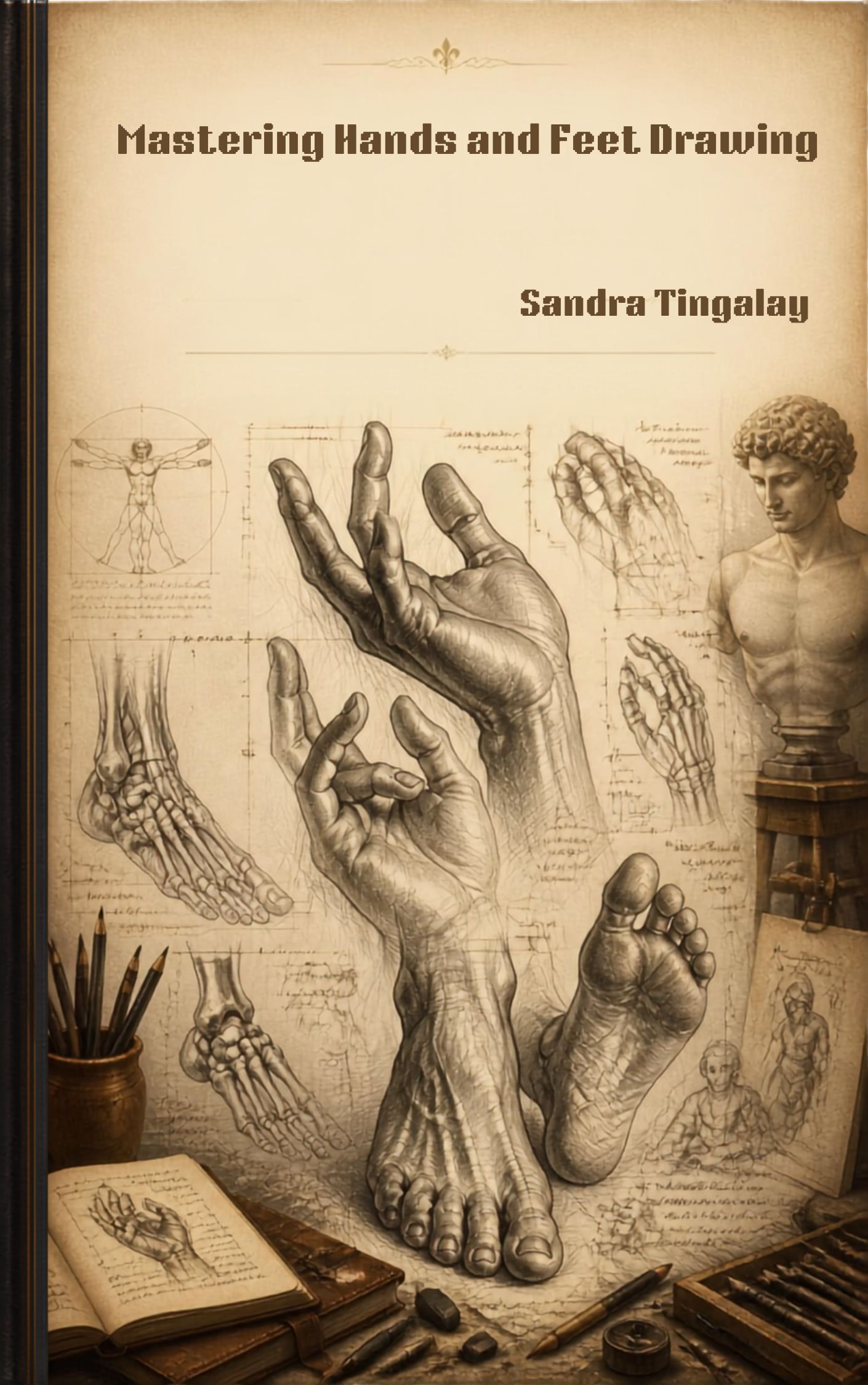
Why Hands and Feet Are the Most Challenging Parts of Figure Drawing
Among all the elements of the human figure, hands and feet are often considered the most difficult parts for artists to master.
Many beginners can create a convincing head, torso, or overall figure, but struggle when they reach the hands and feet. Fingers may look unnatural, feet may appear flat, and small mistakes can affect the entire expression of a drawing.
The reason is simple: hands and feet are not just shapes. They are complex structures that communicate movement, personality, and emotion.
Why Hands Are So Difficult to Draw
The human hand contains an incredible combination of structure and flexibility.
Each hand includes:
Multiple bones and joints
Complex muscle groups
Delicate changes in form
Many possible positions and gestures
Hands can express countless emotions and actions. A relaxed hand, a clenched fist, a pointing finger, or a gentle touch can each tell a different story.
Because hands are so expressive, even small errors in proportion or placement become noticeable.
Understanding Structure Before Details
A common mistake among beginners is focusing on individual fingers too early.
Instead, artists should first understand the overall structure:
The palm as a three-dimensional form
The direction of the wrist
The relationship between fingers
The rhythm and flow of the hand
Once the larger forms are understood, details become much easier to create.
A hand is not a collection of separate fingers. It is a connected system that works together.
Why Feet Are Challenging
Feet are often underestimated because they appear simpler than hands. However, they contain their own complex challenges.
The foot must support the entire body. It carries weight, creates balance, and changes shape depending on position and movement.
Artists must understand:
The ankle connection
The heel structure
The arch of the foot
The relationship between toes
The effect of perspective
A poorly understood foot can make an entire figure feel unstable.
The Role of Anatomy in Drawing Hands and Feet
Anatomy knowledge gives artists confidence.
By understanding the bones, joints, and muscles beneath the surface, artists can draw hands and feet from different angles instead of relying only on copying a reference.
This allows artists to create:
More believable poses
Stronger compositions
More expressive figures
More dynamic movement
Anatomy does not limit creativity. It gives creativity freedom.
Hands and Feet Tell Stories
The power of hands and feet goes beyond technical accuracy.
Hands can reveal:
Age
Occupation
Emotion
Personality
Relationships
Feet can reveal:
Balance
Direction
Movement
Strength
Stability
Great figure artists understand that every part of the body contributes to the story.
Practice Methods for Improvement
To improve hands and feet drawing, artists should practice:
Study Basic Forms
Break complex structures into simple shapes:
Boxes
Cylinders
Spheres
Planes
This helps artists understand volume and perspective.
Practice Different Angles
Do not only draw hands and feet from comfortable views. Study:
Front views
Side views
Foreshortened positions
Action poses
Observe Real Life
Look carefully at your own hands and feet, photographs, and life drawing references.
Observation builds understanding.
Why I Included Hands and Feet in the Natural Forms and Figures Art Academy
The Natural Forms and Figures Art Academy Book Series includes a dedicated volume on hands and feet because these areas represent an important stage in an artist’s development.
After learning basic figure structure and anatomy, mastering hands and feet helps artists move toward greater confidence and expression.
The goal is not simply to draw fingers and toes correctly. The goal is to understand how every part of the human form contributes to artistic storytelling.
From Difficulty to Discovery
Hands and feet may be challenging, but they are also among the most rewarding subjects in figure drawing.
With patience, observation, and knowledge of structure, artists can transform these difficult areas into powerful tools of expression.
The journey of figure drawing is a journey of learning to truly see — and hands and feet are among the greatest teachers along the way.